Front of house

The front of house crew is the restaurant’s face, and they play a significant part in deciding the quality of a customer experience. Exceptional cuisine is one thing, but good service can linger in a customer’s mind, bringing them back and encouraging repeat business.

Front of house workers in restaurants, bars, and gastropubs offer a consistent and high-quality customer experience. They organise reservations, greet visitors, show them to tables, and answer any customer concerns or complaints.

Front of house managers and supervisors are also in charge of supervising teams of employees, which includes activities such as rostering and performance evaluations.

Front of House Staff Responsibilities:

  • Take and confirm walk-in, phone, and internet reservations.
  • On arrival, greet all visitors cheerfully and lead them to their assigned table.
  • Responding to customer problems in a timely and empathetic manner.
  • Accept and notify the appropriate workers about food and beverage requests.
  • Pay close attention to food allergies, dietary restrictions, and preferences.
  • During peak moments, assist colleagues and employees by taking orders, serving meals, and cleaning tables.
  • Always maintain a neat and tidy front-of-house appearance

Working in a restaurant necessitates good communication and collaboration across many responsibilities. As a result, the ability to operate as a team is crucial. Uncooperative employees may damage the client experience and, ultimately, the profitability of business. Working front of house needs charisma and diplomacy. The job requires regular face-to-face interaction with consumers, who are not always pleasant. Ability to multitask, money management experience, dealing with customer complains is necessary skills.

Cruise ship steward

You have the option to travel and be compensated – sometimes to popular tourist areas, sometimes to off-the-beaten-path locations!

A cruise ship steward is a member of the housekeeping crew on board a cruise ship who is in charge of serving the cabins of guests and ensuring that they are clean to a high quality. The steward, also known as a cabin attendant, will make your bed and clean the bathroom each day while you are away.

Responsibilities:

  • Accept food and drink orders and bring tourists to their rooms.
  • Make beds, replenish linen, and vacuum floors.
  • Replace mini-bar products and submit a bill.
  • Attain and maintain the company’s housekeeping standards.
  • Assist in inventorying the housekeeping department.

Typically, the room steward is in charge of delivering crucial printed information, excursion tickets, and the daily cruise news bulletin.

Cabin stewards are also responsible for your safety behind the scenes. During the initial safety practise, you may notice them aiding cops and other crew members. Although your cabin steward can frequently provide information about the ship, they are not usually charged with assisting you with meal reservations, excursion bookings, or room service.

Working aboard a cruise ship eliminates the need to pay for housing, food, laundry, and medical care. Because there are little expenditures the crew must pay for, many crew members are able to save money. Your company will pay for your airfare to and from the ship.

Airline pilot

Being a pilot also allows you to experience the world through new eyes. While most people go to their mundane jobs every day, you will observe the world from a variety of perspectives and be continually reminded of how little we truly are in our vast universe!

As an airline pilot, you’ll carry people or cargo on long or short-haul flights for pleasure, business, or commerce.

The aircraft is normally flown by two pilots: the captain, who is the pilot in charge, and the supporting first officer. To minimise weariness, pilots often take turns flying the plane, with one controlling the controls while the other communicates with air traffic control and completes paperwork.

As a commercial airline pilot, you may anticipate to work weekdays, nights, weekends, and bank holidays on shifts that last between 39 and 41 hours each week.

Responsibilities:

  • Make a flight plan that includes the amount of gasoline you’ll need and the altitude you’ll need to fly at.
  • Choose the optimum route using weather forecasts and air traffic control data
  • Before the trip, brief the cabin staff and maintain continuous communication during the journey.
  • Follow the directions of air traffic control.
  • To reduce noise pollution, observe protocols during take-off and landing.
  • Check data during flight and change the path as needed.
  • Inform passengers and personnel of the journey’s progress.
  • Report on in-flight issues.

You’ll frequently be on standby, so you’ll need to live near the airport where you’re situated so you can get there quickly. One of the key benefits of this job is the opportunity to travel. As an airline pilot, you will have opportunity to travel and will be compensated to do so!

With all of the numerous itineraries that pilots take, every working day involves taking off in one place and landing in another – maybe in a country you’ve never been before.

Depending on your itinerary, you may wind up staying overnight or longer, allowing you the chance to visit other towns and cultures.

Another advantage of becoming a pilot is the opportunity to learn about foreign cultures. You will stay in many different hotels and pass through many different cultural zones since you will be flying to many different locations.

Airline customer service agent

An airline customer service agent works in an airport or a contact centre, offering passengers with information and support. An airline customer care representative in a contact centre assists consumers with ticket reservations, itinerary adjustments, luggage issues, and queries regarding customer reward programmes. An airline customer service representative at a front desk services customers with check-in, issues tickets, offers flight information, checks luggage, and answers ticket-related travel difficulties.

Typically, you’d work for an airline or a ground services agency on behalf of an airline.

Duties include:

  • Deal with passenger inquiries concerning aeroplane departures and arrivals.
  • Check in passengers for their flight.
  • Provide seat numbers.
  • Make boarding tickets and baggage labels available.
  • Inform travellers of baggage limitations.
  • Look after unaccompanied minors and persons with special needs.

To be qualified for an airline customer service agent employment, you must have a high school education.

This role requires:

  • Strong communication skills, the ability to work under pressure.
  • Commitment to customer service, and computer abilities.
  • Patience, compassion, and the capacity to remain calm in tough situations.
  • The ability to absorb criticism and operate effectively under duress.
  • Customer service experience.
  • The capacity to communicate in a second language may be advantageous.
  • It is advantageous to have qualifications and experience that demonstrate customer service and a passion in travel, tourism, or hospitality.

With experience, you might advance to a supervisory or managerial position, such as flight dispatcher. You might potentially work in other areas of airport operations or prepare to be a member of the cabin crew.

Alternative job categories include check-in assistant, airline/airport passenger service assistant, and passenger handling agent.

Museum curator

If you appreciate studying about history and are dedicated to promoting others’ knowledge, a museum curator profession may be for you.

Curators of museums and art galleries oversee collections of artefacts of aesthetic, scientific, historical, and popular importance.

Museum curators purchase, conserve, and display museum collections to the public.

Curation frequently entails a wide range of duties, including:

  • Museum funding raising
  • Making instructional resources related to collections
  • Authenticating objects
  • Creating exhibitions

Art museum curators must be professionals in art, art history, and art authenticity and conservation. Historians must work as curators at history museums. Science museum curators must have some scientific training.

You can get into this job through:

  1. A university course
  2. An apprenticeship
  3. Working towards this role

You may be able to start by doing an advanced apprenticeship in heritage and cultural operations. This could lead into museum or gallery assistant or educator jobs. With further training and several years’ experience, you could apply for curator roles.

Museum curator positions, on the other hand, are beneficial for individuals who are interested in history and wish to integrate it with their creative ability.

You may encounter the following situations in your day-to-day duties:

Choose, purchase, or borrow stuff.

Researched, identified, and catalogued collections.

Ensure that exhibits are safe, secure, and stored in the proper conditions.

Assist visitors in understanding and enjoying exhibitions and artefacts.

Organise public relations and fundraising.

Give presentations.

Train or oversee volunteers or paid personnel at a gallery or museum.

Negotiate funding and exhibit loan.

Flight attendant

Choosing what you want to accomplish with your life is a major choice. You must examine whether it is a suitable fit for you. Is Working as a Flight Attendant a Good Job?

A profession as a flight attendant is a good choice. When making such an important choice, both the rewards and the risks should be evaluated.

Requirements for becoming a flight attendant – the criteria differ because each airline has its own policy. To become a flight attendant, you do not need to have a specific degree of education. Although some airlines may prefer that you have at least a year of college education. If not college, you must have had some tourism and travel instruction.

  • You should be able to deal with unexpectedly stressful situations.
  • You must be able to multitask.
  • In the event of a medical emergency, you should be able to provide emergency first aid.

What exactly do flight attendants do? – they generally function as a guide for the passengers. They offer the necessary information for the flight. They also ensure that the passengers are as comfortable as possible. They make certain that passengers are safe.

  • Between flights, prepares the aircraft by ensuring that the cabin spaces are clean.
  • Makes flight reports.
  • Provides instructions on safety procedures as well as demonstrations of the appropriate usage of seat belts, breathing masks, and flotation gear.
  • Greets customers, aids with timely seat assignment placement, and ensures all carry-on bags and personal belongings are correctly stored in overhead or under-seat storage.
  • Answers queries from passengers concerning flight information, time, service, aircraft data, weather, and delays.

Advantages of working as a Flight Attendant:

  • Paid hotel visits – airlines also pay for flight attendants’ hotel rooms when they travel for business.
  • You have the opportunity to learn new things about cultures you never knew about.
  • It offers adventure, good income, personal contact, and beautiful memories.
  • Your timetable is designed with a lot of leeway – flight attendants can trade, drop, switch, and work a schedule of their choosing.

It’s a satisfying profession that allows you to live a lifestyle that most people wish they could have. Although it’s a great career for a lot of people, there are some people that it might not be a good fit for. This is based on the fact that certain people value different things in a job and want to live a certain lifestyle.

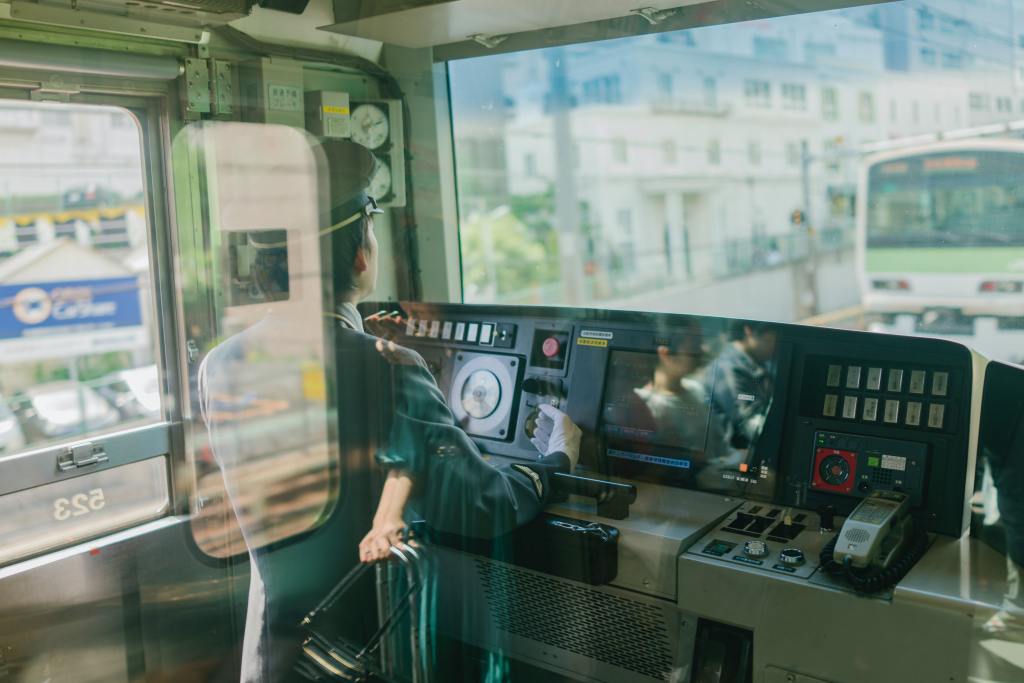
Train driver

Do you want to be a train driver?

Their responsibility is to safely convey their clients from point A to point B while also keeping our public transportation system working. Train driving is one of the most popular jobs available — 1,100 individuals apply for every position.

Today, train drivers play a vital part in the transportation business. Train travel is one of the most common modes of public transportation, with thousands of commuters relying on rail network on a constant basis.

Train drivers often do the following tasks:

  • Before beginning each voyage, inspect the engine and overall condition of the train.
  • Making certain that the specific path is understood and agreed upon with the control centre.
  • Maintaining a keen awareness of track and weather conditions.
  • Notifying the control centre of any risks discovered along the route.
  • Command automatic doors.
  • Make notifications to passengers.
  • Securely exit platforms and enter stations.
  • Always follow safety standards.
  • Bringing the train to a halt at the right stations on each timetable.

To become a train driver, no official credentials are required. However, train businesses will require a high level of education, with strong GCSE results being preferred. Before you may begin training as a train operator on the nationwide rail network, you must be at least twenty-one years old, while people aged eighteen and up can normally work on a train.

The training procedure will last between 18 and 24 months and will involve multiple components such as driving practise with a trained instructor and theoretical sessions conducted in a classroom setting.

You might work on passenger, freight, or engineering trains after you’re qualified. With competence, you might combine your profession with training new drivers on new routes.  You might also work as a driver instructor, training new drivers in the classroom, using driver simulators, and taking trainees on road trips.

You might advance to management, overseeing drivers and ensuring that trains and employees are in the proper locations on the railway system.

Luxury travel advisor

Luxury travel entails experiencing countries in unique and inspiring ways on your terms. To be genuinely luxury, your vacation should revolve around what you want and when you want it. Rather than obtaining things, luxury travel should be about experiencing them.

A profession as a luxury travel planner is not only incredibly satisfying, but it also allows you to explore the world. It’s incredible to jet off to the nicest resorts, be the first to view a new hotel, and go to places most people can only dream of!

  • The job comprises conducting research on the greatest luxury places to market to clients — and if you enjoy travelling, completing all your professional chores, such as reading about a destination or brainstorming a better method to sell to clients, won’t feel like work at all. It will be both enjoyable and profitable for you.
  • You must be diligent and patient while beginning a business in this field. Take advantages of every chance to network and meet possible new clients.
  • A premium Travel Advisor needs a global network of travel suppliers to guarantee that their customers are treated like VIPs and receive additional facilities and benefits—a definite method to convince clients to book with you.

Air traffic controller

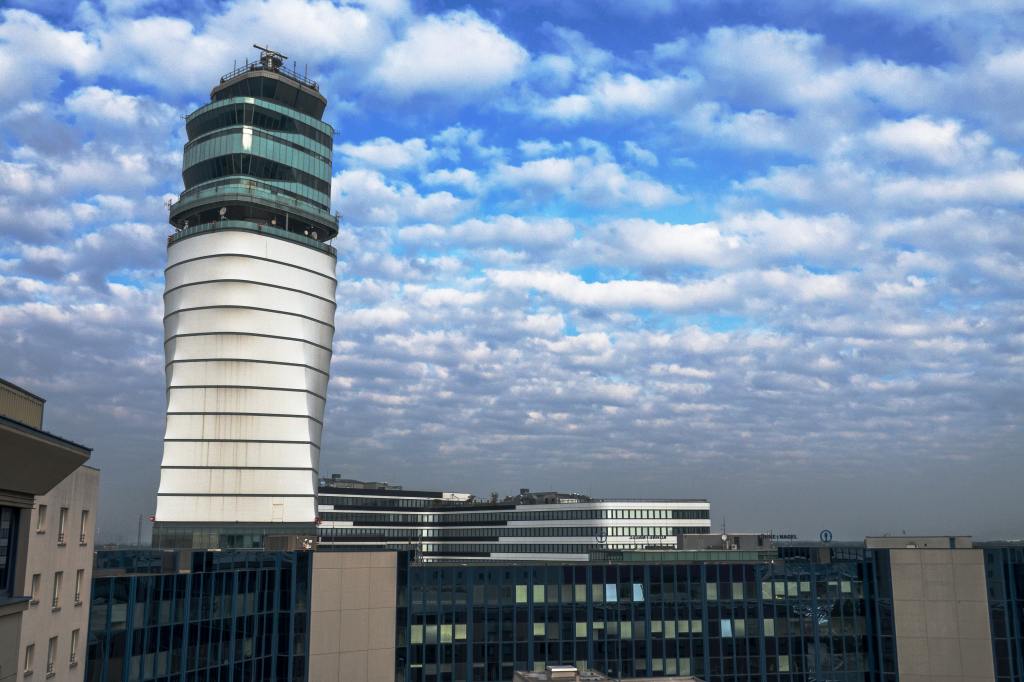
Air traffic control is a highly skilled discipline that ensures the safe transit of people and cargo by aeroplanes. Air traffic controllers are specialists that permit and regulate commercial aircraft in order to maintain a safe distance between planes in the air and during take-off and landing.

  • Air traffic controllers can be proud that their profession is critical. They issue weather warnings to pilots, monitor aircraft on radar, and grant approval for alterations to flight plans.
  • Working as an air traffic controller may be a thrilling experience, as well as a gratifying and challenging profession.
  • The job market is in good shape. People will always be flying, which is top pick if you want to work as an Air Traffic Controller.
  • Work in the airline industry without having to travel!

Air traffic control (ATC) is a distinct profession that is unlike many others. A highly skilled position that necessitates extensive knowledge and extended training periods, ATC necessitates dedication from the start. Despite the lengthy list of prerequisites, being an air traffic controller may be a very satisfying job with many benefits.

Hotel general manager

The general manager oversees all daily hotel operations to ensure that visitors have an exceptional experience. They serve as brand ambassadors, offering leadership and strategic direction to all hotel departments.  

This role necessitates a versatile and dynamic problem solver with great leadership talents, capable of empowering personnel to provide superior customer service to hotel customers, colleagues, and visitors. 

Responsibilities of a Hotel General Manager: 

  • Ensure that all guests enjoy excellent service. 
  • Create marketing strategies, budgeting, set sales objectives and manage accounts, analyse sales numbers, and provide reports. 
  • Establish the hotel’s reputation for excellence by evaluating the cleanliness and care of the rooms, public areas, and surrounding grounds. 
  • Provide the vision, leadership, and strategy that motivates your team to provide great guest service, which leads to financial success. 
  • Ensuring that the hotel complies with health, safety, and security rules, as well as licencing legislation. 
  • Maintain frequent briefings and meetings with all department heads. 
  • Resolving issues and overseeing service recovery processes.